

At some point every year the news reached Romanian outlets that Danes rank very high in the happiness statistics. As a Romanian, unhappy, gossipy and complainy by nature, I would roll my eyes and just attribute that to simply a higher level of living, to more money basically.
Seven months into my Danish affair, granted, I may still be in the honeymoon phase, I find myself rolling my eyes at mentions in social media, or otherwise, of the fact that Danes being one of the happiest people in the world is in fact not true. That they may not be as welcoming to expats as one would expect, that there’s too much darkness at this time of the year, that the cold and the wind are unbearable and so on.
And I found myself thinking about this and realizing that many people have the word happiness wrong when they think about the statistics presented. Having lived here for the past months, I am convinced that Danes are one of the happiest people in the world. That is when we define happiness as accepting, if not loving your country, relaxing in the predictability of traditions and systems and above all, less stress.
When I say the latter, I do not mean to say Danes work less. Living here for the past seven months I realized that there were things that stressed me greatly in the country of my birth and that, by the time I left, had become such a chorus of my life that I hardly even recognized them or their effect on me anymore. That was simply, life.
Our first encounter with the Danish authorities was a bureaucratic one. It almost always is. However, there was no humiliation. We scheduled an appointment, we showed up on time, we were welcomed on time, we didn’t have to bow down to a window where the mighty state employee would do us a favor and serve us. It was fascinating to watch the behavior of the gentleman helping us that, without any words communicated to us very clearly: I am in your service. Well, that definitely must position anyone higher up on the stress-free scale.
I come from a country where everyone and their mother has a car. Many may not have a home but they definitely have a car. Preferably a noisy, big, statement-making one. It had gotten to the point before I left where, to drive for 10 km meant two hours of rage bordering stress. My family and I now live very close to the center of the Danish capital. On busy days there are at most 10 cars at a stoplight. In almost one year of living here we must’ve heard five cars honk. We would actually laugh about it and say that those drivers must be Romanian. Most cars are electric but most importantly, most of the cars are… bicycles. I realized that in my previous life I had gotten to a place where I would simply plan for the stress and frustration of sitting in traffic and really not knowing when I was going to be reaching my destination. Practically a perfect storm of stress: uncertainty, pollution, and noise. One more push up the happiness scale for Danes.
One day at lunch, my wonderful and very welcoming Danish colleagues were expressing their worries at the medical system in Denmark. They were worried that there aren’t enough staff and that there are long waiting times for everyone to get an appointment. For clarity I will explain that, when my family and I received the residency permit and the identification number that put us on the map for the Danish authorities, we were automatically assigned to a family doctor, provided all of the details via email and sent our medical card at home. No form filed in triplicate was needed. When needing to have a medical check up to renew my driving license, I made an appointment through the phone app I was provided, was met in the reception of a warm and cozy office and the doctor actually spent time talking to me and explaining what she was doing. At the end of the meeting she took time and said, do you have any other questions? Can I help you in any other way? And let me clarify: this is free medical care (the one covered by taxes, yes). What my colleagues were saying made me laugh and so I told them the story of my infertility treatments, of being admitted in Romanian hospitals where I slept in the same bed with two other people, after being told that it is a favor we are accommodated in that hospital because we’re not sick. And the story of being herded in doctor offices, naked, so that the doctor would not have to wait for us to undress, all the time wondering where I should put the bribe money because I had no pocket on my bear skin. The silence in the lunchroom was telling. I am not sure they believed me. One more point up on the scale for Danes.
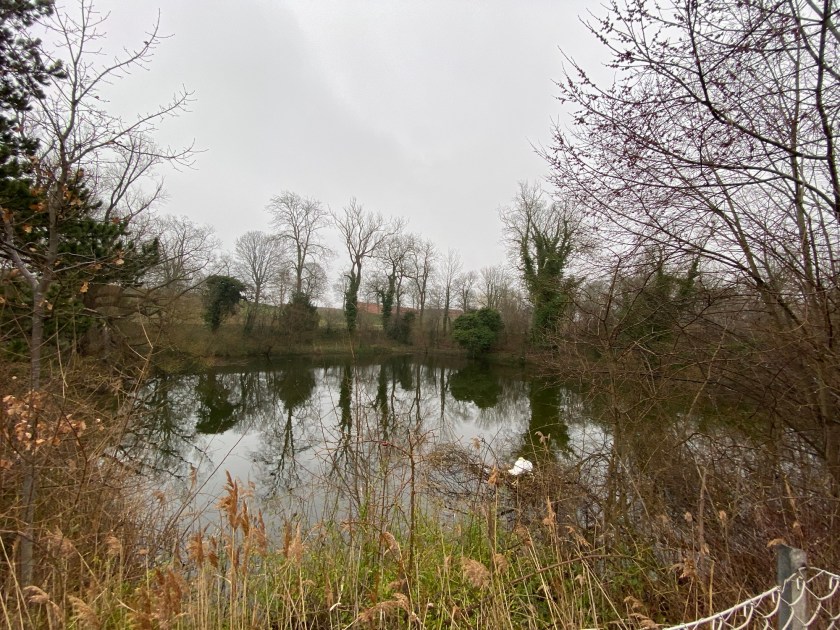
Every morning I start my day with the best meeting of all: I stand outside, rain or shine, and welcome students. Yesterday morning I found myself basking in the largeness of free space. Because the greatest landscape that I can see from the door of my workplace and most or the windows is made up of the sky and the sea. Last week someone made a comment about nature being the great de-stressor, and it is important to note that it seems Danish authorities understood that as well. It must be a deliberate choice not to tear down parks and cover the sky and water for the sake of building more skyscrapers or more residential areas. This is definitely stressful people looking for homes but preserving parks and green areas to the best of possibilities, and in the best natural condition seems a priority here. Walking our dogs at 6 AM through a park with no lights feels almost like forest bathing. Sometimes it pushes me to pull out my earbuds and stop the podcast. I usually listen and just feel my body untense (because this is what stimulation withdrawal feels like).
The fact that Danes are statistically placed high on the happiness scale does not mean they are never unhappy with their country or what happens here or that they live their lives just oblivious to the hardships of the world. People work hard, the weather is tough, people hurt and hearts get broken. That is life. What I’ve come to understand Danish happiness to be is trust that things here work to high degree, acceptance of decisions (even when they are not popular), a respect for their country and systems and a work life balance that I am still finding very hard to get accustomed to.
Celebrating my very first Danish Christmas with one of my colleagues and her family and friends I met an exceptional lady, who was in fact Eastern European. She had lived in Denmark for the past two decades and built a family here. She told me something about overworking that stayed with me: she said it’s not only that nobody asks you to work after your time in the office is over, but also that workaholism and overworking are frowned upon. She mentioned that at some point, as it was so hard for her to adjust to this new way of being and living, she would take work home and hide to do it. Fortunately she quickly realized how ridiculous the whole situation was and started putting her effort into learning new ways rather than wasting her life working.
I find it very interesting that a country, which is ranked so high on the happiness scale, also ranks so high on the scale of cost-of-living taxes, the toughness of weather and strictness of rules. I think that this is the lesson. At least this is the lesson I’m learning here. Happiness is not about the freedom to cut corners or do whatever you want, it’s not about whether your pocket flows over or the sun shines 300 days in a year. Living in Denmark I’ve started to define happiness in terms of predictability, room to breathe and warm lights in every window in a Danish night.
 Connect