
Had I still been Catalina, the Admissions Director today, my conversation with parents coming wanting to enrol their children in an IB school would be quite different.
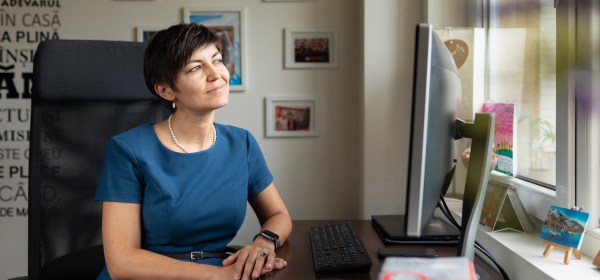

Had I still been Catalina, the Admissions Director today, my conversation with parents coming wanting to enrol their children in an IB school would be quite different.

This week’s readings in my MEL programme challenged some of my deepest assumptions about what learning is—and who gets to define it. Connectivism pushed me to question whether our “connections” are truly human or increasingly mediated by devices that change how we think, remember, and make meaning. Then came the unsettling idea that learning can exist outside people, in systems, organizations, even algorithms. And the line that stopped me in my tracks: “There is a right answer now that may be wrong tomorrow.” So what is worth learning?
Rhizomatic learning stretched me further. David Cormier’s argument that “community is the curriculum” made me reflect on how essential inclusive communities are, not as add-ons but as the actual mechanism through which learning happens. His emphasis on engagement, effort, and connection-making also contrasts sharply with my son’s current IB Diploma experience—where rigid rubrics and prescribed language often overshadow authentic learning.
Returning to formal study at nearly 50 has made me aware of how nonlinear my own learning has become. I learn in spirals, bursts, and late-night sparks. And I can do this because I have support, stability, and no pressure for outcomes—privileges many young people do not have.
It’s messy, uncomfortable, and deeply transformative.

The view of education as an encounter between the student and the world deeply resonated with me. It reminded me of Hannah Arendt’s call to love the world enough to take responsibility for it. Further reflections on agency, paradox, and respect reframed my understanding of what education truly is, or could be: not simply learning, but becoming. It is about engaging with the world, embracing its contradictions, and finding meaning in the spaces between knowing and not knowing, teaching and being taught.

Schools are learning organizations. I hear that so often. Shouldn’t then the expectation of anyone who works in a school, be it the Director, a teacher, the secretary or the cleaner, be that they not only receive a salary for their job but also that they leave it (whether upon retirement or for another place) a more educated person?

I dream of a place where we look at each other so much more as partners rather than us and them and where we take the time to understand each other and the part we play in designing the experiences that shape the kids we love.
Partnering with students, families and schools towards effective cultural transition
Perspectives on International Education, Personal Memoirs and Reflections, and Essays
Reality Courage Ideas
Reality Courage Ideas
Reality Courage Ideas
Reality Courage Ideas
Reality Courage Ideas
Reality Courage Ideas


