
For the first time since I started to write these posts I debated with myself about whether it was better to write this in Romanian. It somehow felt that my fellow Romanians would be touched by this in a different way. And then I realized that many of the Romanians who read my words understand English and this language would help send the message further.
I ordered Nova Reid‘s “The Good Ally” a second after a read one (one!) review on LinkedIn. If you ask me why it only took one review to push me to order a book by an author I had not heard of until then, when financially things were not rosy for me, I would not be able to respond. It just did. And when I started reading it, it sucked me in. Nova is a gifted writer and a passionate and compassionate human. Over the past years I have gone through many materials that tackled racism, its roots, effects and white fragility and none had drawn me in the way Nova’s book did. Her tone was clearly “no BS here” and also “I know this is hard” and “this work saves lives if done well.” All at the same time.
One of the things Nova does from the get go and through the book is pay a lot of attention to the effects of white fragility. She warns her white readers about the overwhelm, guilt, shame, about wanting to run away from the work and about the need to prove that you are not racist. On every other page she reminds us to breathe. She stops her heartwrenching stories to ask about what we feel in our bodies. It is truly remarkable. Possibly the aspect that felt different from any other material I read so far on racism is Nova’s humanity, boundaries and willingness to allow us, white people, to still be who we are while we learn, with the promise of an upcoming change she walks us through.
During my reading of the first half of the book, I felt quite proud of myself. While Nova was advising white readers to breathe, pay attention to body reactions and default messages, I felt zen. “Wow, how evolved you are!”, my ego whispered in my perfectionist ear. “How much you have learned!”, my ego stroked herself. And most probably because reality just could not take that much delusion, it hit me with a realization: what if this book were not about Black and Brown people in the UK or the US, what if it was about Roma people in Romania?
Oh, what a tumble! I instantly fell from my self-built pedestal and, just like upon an order, my racism started marching in: “if you’re not good, I’ll give you to the gipsies,” “why are you being a gipsy? (when wanting to say deceitful, dirty),” “what is this gypsiness here? (meaning mess, dirt). Images started coming into my mind about the way I felt as a child, going into the apartment of one of my friends on my street, a Roma girl, feeling like “my parents would kill me if they knew I am here.” Because I was supposed to stay away. “Why are you playing with that gipsy? Do you want lice?” (I apologize for the use of the word gipsy, it is only meant to reflect the reality of the way things were and still are spoken around here.)
The book I was reading was transformed. From a walk in the park, I was now climbing Mount Everest with no gear. So I started looking for information. I started with listening to people talk about the five hundred (500!) years of slavery Romanians inflicted on the Roma, about the Roma Holocaust and about the meaning of some of the words we throw around. About the meaning of the word that translates “gipsy”in Romanian language, tigan, taking them back to the concept of being untouchable, outsider, pagan, not of us, other.
And all of a sudden, all of those things Nova warned me about at the beginning of her book started to make themselves known in me. Listening to Obiceiul Pamantului, I felt all the feelings: shame, rage, heartbreak, rage, overwhelm, what can I even do?, why?, why?, no wonder! … All of them at once and just making it hard to keep walking and driving. I was floored by the story behind one of the sayings I grew up with and use so much today (hopefully no more): “you drown like a gipsy at the shore,” something my parents and grandmothers would say to me to indicate that I wasn’t persistent enough to take a job to its fruition. When the voice on the podcast explained that this in fact was a practice during slavery, that the Romanian slave owners lied to their Roma slaves, telling them that if they swam a large body of water they would be released, only to see them drown and washed out on the shores, I felt physical pain. Why is it that humans do this to other humans? And other humans think it is ok, the rule of the land?
My journey to awareness took me first outside of my own country. I guess it had to make sense in larger concepts, in more distant contexts, before I could look in my own garden. In this process I am reminded about family roles and how we can start to break patterns first only in relationships that do not mean that much to us. If you are the savior, you start by trying not to help someone you don’t know cross the road, you train there and when you have built enough muscle, you try it in your family. I guess time has come for me to try it in my family. I can only hope I have enough muscle already.
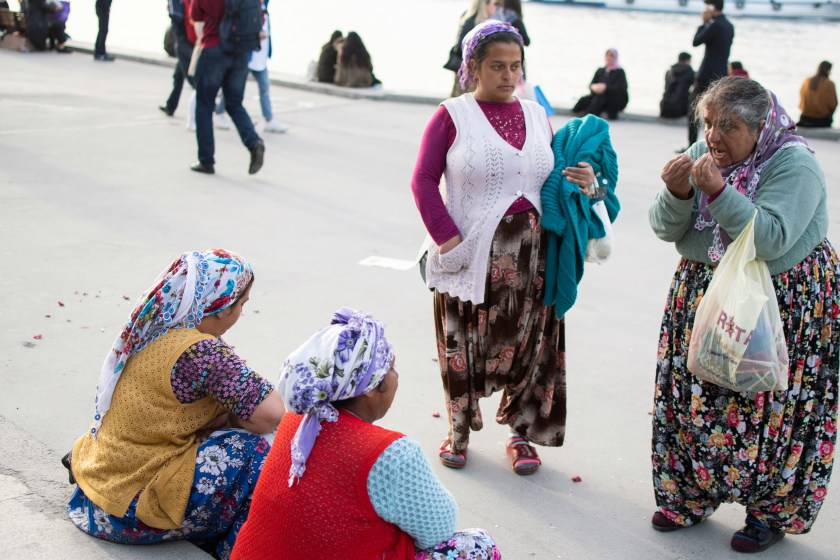
Photo by Mihai Surdu on Unsplash
 Connect