

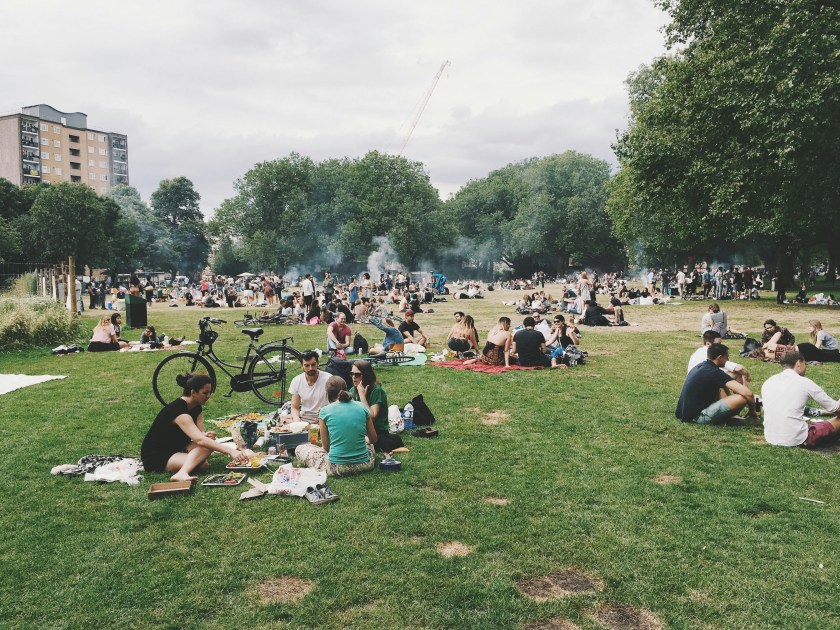
The moments I love the most in my current studies are the sparks that my mind and heart get when connections are made. I spent yesterday and the day before mesmerized by the ideas of Professor Geert Biesta around what really matters in education and the concept of its purpose being world-centered. Having spent my weekend listening to Yuval Noah Harari and others postulate about the areas in which AI will take over our known reality, it felt much more humane to hear Prof. Biesta’s predictions about the future of education. Attempting a response to the much uttered issues of “we don’t know what the future holds,” “everything is changing too fast” and “we are trying to educate for the 21st century with skills that belong to the one before”, Prof. Biesta posits that three areas in which we will need to be educated still, even in the following five decades, are democracy and the way we preserve it when our values and discourses are so very different, care for our planet and care for each other.
If I were to listen to my body, I would say Prof. Biesta nailed it for me. I felt his words deep in my core and my brain went instantly to the mantra of one of the very few great school leaders I know today. A true fan of Margaret Wheatley, this school leader repeats every chance she gets that “whatever the problem, community is the answer.” So, at the intersection of this and Prof. Biesta’s estimations of future conondrums, I am asking myself this morning: is community really the answer?
Dr. Brene Brown identifies connection as “the reason we are here”. She outlines the fact that “we are hardwired to connect with others, it’s what gives purpose and meaning to our lives, and without it there is suffering.” The only definition of a higher power that feels true to me is also hers: “Spirituality is recognising and celebrating that we are all inextricably connected to each other by a power greater than all of us and that our connection to that power and to each other is rooted in love and belonging.” So, community does seem to be the answer, but really, to whatever question? I think that yes, community is the answer but the answer might not be the one we hope for or the one we expect.
More often than I wish, I hear this statement about community formulated in the shape of a request, as if “community” were an entity external to us, something that is supposed to act independently and come to our aid. I think that is such a painful trap. Especially because in framing community that way, we set ourselves most certainly for the pain of disconnection.
The root of the word “community” is the Latin word “communis,” meaning “common” or “shared”. Another way to look at it is as a joining of the prefix “con” (meaning “together” or “with”) and “munis,” a word which, by some extrapolation, could be interpreted as “service.” It is very important, I believe, that we observe that there is no “community” without us: we are an integral part. It would not be a community, something together or with us, without us. I know it sounds very intuitive, bordering on pleonasm, but the statements I hear sometimes about community support make me wonder.
I have many times heard the saying that we join companies or organization and we leave our managers or bosses. And I do think that, to some extent, is true. I would however offer the alternative that we join organizations and we leave communities. And that is what makes the leaving a small act of dying. I have left a few communities in my life, whether religious or professional, and I can attest to the fact that in each situation I felt that I left something of me behind. That is, because I had invested something of me, of my heart, of my soul to create or access that community in the first place. There could not have been a community for me, without me.
When we look at our workplaces, a mistake we often make is believing that doing our job properly, even going above and beyond, means investing in the community, creating the community that will then answer whatever question we ask. I believe that is not the right way to look at things: we do our job as well as we know how and we get paid and offered the benefits we were promised (when this is not true, the problem is very different). To co-create community means something completely different: it means first and foremost to see people. To see them as they are, all of them, regardless of color, ethnicity, title, even behavior. To remember that we share humanity and this, before anything else, establishes us as a community. The bits of ourselves (of our personal time, of our feelings, of our care) that we brade with the bits others bring create and strengthen a community. The nurturing we bring continuously keeps that community alive. I am convinced that the reason why “community is the answer,” is precisely the precious composition of one: small bits of humanity knit together in a strong net that we catch each other in.
When we look at “community” as a service to be provided to us because apparently “it is the answer,” we forget to ask some extremely important questions like: How am I part of the community? How do I contribute? What does my behavior say to each member of the community I believe I am part of? Who do I see and who do I not see? How can I help community be the answer to whatever question we ask? Do I assume it happens by default?
To go back to Prof. Biesta’s ideas about what the future holds for us, we can infer that the questions posed to us will sound somethig like this:
How can we all live together in respect and freedom when we are so different and believe in such different things?
And the answer is … community: being educated about and remembering our shared humanity above anything else and working to create communities of humans where we belong just as humans even if our color or opinion is different. Especially then.
How will be figure out the equation of “no planet B”?
And the answer is … community: being educated about and remembering that this planet is our home and stitching together small acts of service to our planet, becoming a community with our planet so that we don’t harm each other.
And last but definitely not least, how are we going to care for our elders, our sick, our marginalized and our lonely?
And the answer here is for sure community. Trying hard to see each other, especially when we are different, pushing against the discomfort we feel when we are asked to hold out our hand in community to “the other,” unlearning prejudice and division and relearning that we are all one.
Whatever the question, community is indeed the answer. Answers however are not always comfortable. This answer can be: “What you want is not possible because you have not nurtured any community. Go do that.” The answer can be: “Yes, you have to leave, because this is not your community and community is important.” Or the answer can be: “Reach out to your community and accept whatever it has to offer.” Not always comfortable, but always the answer.
Photo by Robert Bye on Unsplash
 Connect