

When I heard our teacher ask us to do a personality test, I rolled my eyes (it seems to be a usual practice for me … ). Another one? Over the past years I had gone through so many. Some of them twice. What more could I find out about myself?
Sort of tired to dig more, but somewhat pushed by the fact that I am enroled in the program, I proceeded to fill out yet another personality test. This one was was going to shed some light on my needs and therefore what constitutes the motivation behind my behavior. And, another piece of the puzzle fell into place.
The Reiss Motivational Profile identifies sixteen universal human desires that drive behavior and define personality. And while I was not surprised to head about my very high motivation for idealism and acceptance, looking at the test results through the lens of my previous leadership positions was what offered the surprise today.
Reading through the interpretation of my results, I came across a notion I had never encountered before: the rule of individuality which encourages us to “treat others as they want to be treated.” Now this was something that stopped me in my tracks because it went against a principle that I had been taught about and pushed to follow all my life: “do unto others as you would have them do unto you.” So … was I wrong?
There is apparently a saying in the world of human resources that tells us we join organizations and leave our managers. I have been told this many times as a manager and as someone who disliked their manager. Over four years ago I decided to quit a job I had had for a long time, in a place that meant to me much more than just a “workplace,” I did not dig deep and just concluded I had left my boss. After all, we did not have a good relationship and … wasn’t that the pseudoscience? I was tired, I felt wired because of the decision and I just … needed to go. It was time. And none of these were far from the truth. But going through the Reiss Motivation profile these days, I gathered a different understanding of what happened. And this understanding made much more, painful, sense.
For years I had attributed my leaving to burnout. It took last week’s personality test to understand that there was more to it. I had to be honest about the fact that it had been my team that I left. My team that I had mislead. Educated from childhood to “do unto others as we would have them do unto us,” I could not understand why that made several of my team members frustrated, even angry, many times. After all, I was not doing anything that would either not do myself or not have done unto me. The Reiss Motivation Profile helped me understand, because aparently it was needed, that people have different motivations, that they try to fulfill different needs in themselves and that this very much shapes the way they see relationships, tasks that are assigned to them, feedback we provide, projects we propose. My lens as a manager was a selfish lens, only run through my own needs and motivations, not only as a manager but as a person and I was not open enough to ask any of my team members: what do you need from this day, from me today, from this task, from this job?
If I were to start managing people today, I would make it the first priority to find out as much as possible about the motivations and needs of each individual on my team. Not just the needs that can be named and acknowledged consciously but especially the ones that push action from the subconscious. Once that is no longer “an unknown element,” we would be able to navigate on, hopefully some calmer waters, lulled by the knowledge that each of us are different, have equally strong needs (though they may be different in meaning) and deserve to be known and heard from that point of view. How beautiful would a day be when a team starts their work together, a new season or a new year by exploring needs and motivations and brainstorming ways in which these can be met together, to the best extent possible within the environment of the organization and each working day.
A girl can dream …
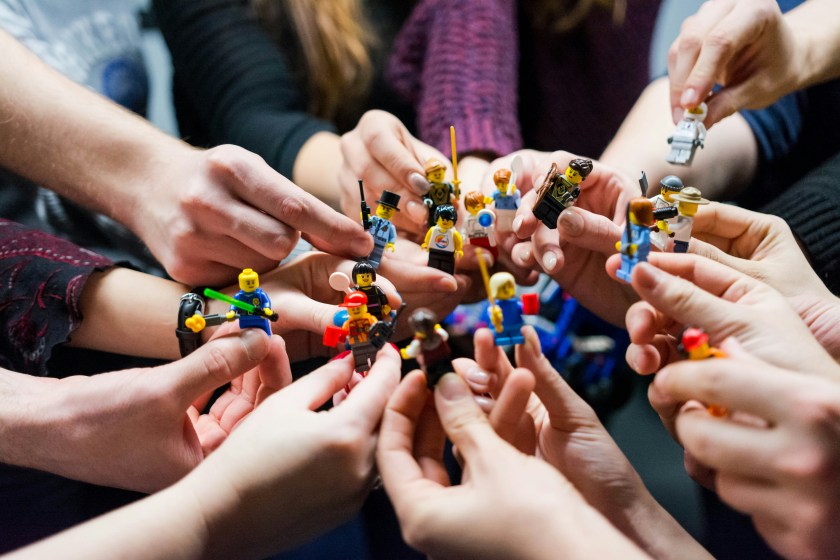
Photo by Vlad Hilitanu on Unsplash
 Connect