

I was not raised in times when God was a notion you heard in schools or in the family so freely. The Communist regime that held Romania tight in the first decade of my life feared God. Not in the sense that a “good Christian” fears Him but more like an election contender. When Ceausescu realized that he might lose the grip on his people due to their fear of God, he had to do something about it.
So, for obvious reasons, I was not raised a churchgoer or what some would call a practicing Christian. Later in my life, I discovered the Orthodox church in the middle of one of my life’s greatest struggles: watching my younger brother die due to heroin addiction over the span of more than ten years. By that time I had gathered that churches are places people go to pray, to ask for help, for forgiveness or for strength.
The power of being raised in faith young is the roots that it catches in your early being. I had none of that but I was a perfectionist and knew how to execute a plan well and to the dot, once it made sense to me. And so, I worked a deal with God (I thought): you save my brother, I will do all things church. And for anyone who knows me this won’t be a secret: I did. I overdid.
For many, many years I went to mass, different other sermons, fasted, paid priests to read prayers on my behalf, donated, read my weight in books written by enlightened monks. I was no longer looking to deepen my deal with God, a few years down the line it had become clear that the whole deal was rigged and my brother was not going in the right direction. I was reading, and churching, and reading as many pre-written prayers as I could, searching for a feeling, something that was advertised so much but one which I was never able to find: communion. Not the bit of wine you drink in front of the altar. Communion with others, a unity of souls in kindness and in compassion. Belonging.
The more I looked for this, the more I felt rejection for being a woman (like that time when after a miscarriage, heartbroken and in tears, I was kicked out of a church because I was inpure and they had to read prayers over my head to tame my demons), for being young (like all the times when I went to confession and looked for a conversation with a godly mentor and only got frowned brows and old men either judging me or trying to fondle me), for being depressed (like that time when asking the priest, in desperation, for help, I found out that being depressed is a sin against God and I should know better), or for being a wife in a loveless marriage (a dillema easily solved by a priest who in confession told me he understands I don’t love my husband but that it is the woman’s duty to save her husband and therefore, good luck to me). When I fell in love with a woman and decided that the hell the church promised me if I tried this path was easier to take than what I had been living inside, my “relationship” with the Orthodox church imploded.
What this left in its wake was not a hole: there had not been anything real there to start with. It in fact left too much behind. It left a hefty load of beliefs, words and “teachings” that make it so that when I think about God today all I see is an old, all-knowing, white male, long bearded, dressed in somber clothes, quick to anger and judgment, ready to spite me at every step, who at this particular time in my life has no time for me because … our family is not a traditional one. Oh, and to add to all of this, as one priest once assured me, all of my sins will move on down the line, for seven generations. Not that encouraging, what can I say?
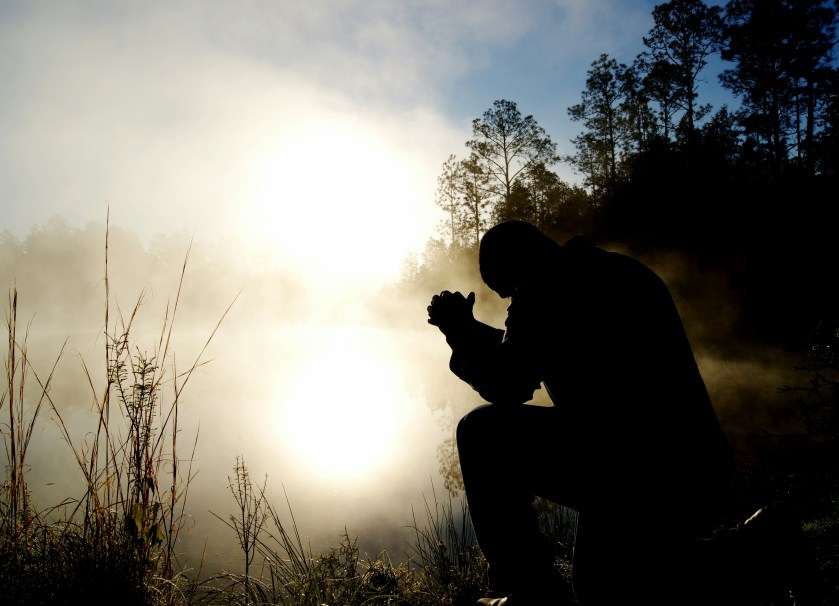
Today, in the middle of grief for people I love are going through pain, the drift I feel at parenting a young adult, the rollercoaster of women’s midlife and the general state of the world, I find myself recognizing the same need that kept me crossing the thresholds of so many churches: the need to believe in something higher than me, a comunion with people who also do that and maybe with more than just people. The other night, thinking of someone I love going through something horrible and unfair, I felt the need to pray. But I did not know how to start. If my relationship with God is so compromised, who do I pray to? And if there isn’t an entity to pray to, could this still be called prayer? If not, what do I do with these feelings in my gut, this energy that I would like to somehow put out in the ether perhaps to be shared with those in need?
I have said this before here: the only explanation of spirituality that makes sense to me comes from Dr. Brene Brown. In her book, The Gifts of Imperfection, Dr. Brown says: “Spirituality is recognizing and celebrating that we are all inextricably connected to each other by a power greater than all of us, and that our connection to that power and to one another is grounded in love and compassion. Practicing spirituality brings a sense of perspective, meaning and purpose to our lives.” And for a long time I felt this was enough of an understanding. That it sufficed. I had just never found this and probably never will but at least I had a definition of what I was missing.
But today I found myself thinking that Dr. Brown is a very religious woman as well. She is part of a church, she is a regular church goer and faith is one of her values, as she declares herself. And that maybe it was precisely her faith and her church that helped her come to this definition. Upon this realization I felt lonelier. And my questions just got a bit louder. Can I pray if I cannot find a way to believe in God? In any form of God? Can anything authentic come out of me through the thornbushes of so much religious dogma and the orthodox preachings of my youth? These days, more than I have in some time, I am missing what I have always missed, the belief that there exists a power, greater than us, rooted in love and compassion, to which we are all connected, together.
Photo by Aaron Burden on Unsplash

